


The Princely States
Page Last Updated: September 03, 2026
Although the British ruled most of India during the 19th century and early part of 20th century, there were a number of small states which were independent and were ruled by local kings. The kings usually inherited the throne and the government from their fathers. Since these kings were natives, they understood the complexities of Indian culture, and ruled by the Indian value systems -- even though they had to depend on the British for their own security and well-being.
In the early part of 20th century there were almost a thousand such independent states in the Indian subcontinent. At the time of India's independence in 1947, there were more than five hundred states ruled by independent kings who were integrated into the either India or Pakistan the two newly formed nations. As Prof. Edward Haynes said "India's independence meant loss of independence for these centuries-old states".
Royal Pensions
The hundreds of these so called "Princely States" were integrated into India through cajoling, blackmail, and negotiations. Some kings were indeed happy to join India who saw the potential of home rule for a large nation. The kings were provided a pension by the Indian Government, and many indeed joined Indian Government as Governors, Parliamentarians, and other leaders. In what some consider a great act of betrayal, Indira Gandhi ended these pensions during her autocratic rule as the Prime Minister of India. Some politically powerful heirs of princely rulers continue to evade taxes and dispute the treatments meted out by the Government, but ending the pensions was the fatal blow to the royalty in India.
Pictures of Royal Families of India During the 19th and 20th Centuries
 Bhavanrao, Raja of Aundh The ruler Bhavanrao was a nationlist and a follower of Gandhi. Via Aundh Experiment he paved way for village-level self government in India. | 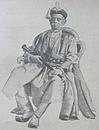 |
 |  Elephant belonging to the Maharaja of Jaipur |
Enjoying Music While Smoking | 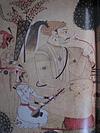 |
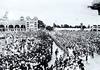 | Festivities at Mysore Palace Photograph of 1906 shows large crowd gathered at the royal palace of Mysore |
A Hindu king and his subjects. Detail from painting of Srirangapattana summer palace | 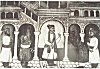 |
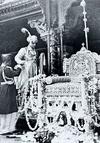 | King Climbing his Throne of Power |
The Maharaja of Jaipur Photograph from 1909 book "Modern India" by William Eleroy Curtis | 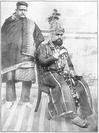 |
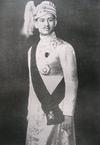 | Maharaja of Travancore Picture of circa 1938 of Chithira Thirunal Balarama Varma (1912-1991) |
Maharani Anita Delgado of Kapurthala Photograph of wife of Maharaja Jagatjit Singh | 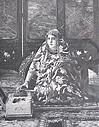 |
 | Prince Indrajitendra and Pricess Kamala |
Princess Amrit Kaur (1889-1964) Kaur, a descendant of Kapurthala royal family was an early women's rights activist in India, volunteered as a social worker, and fought for India's freedom. | 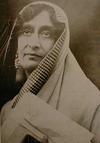 |
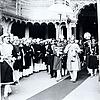 | Ruler of Mysore |
Young Ruler and his Guardian Photograph of Maharaja Sardar Singh of Jodhpur (seated) and Sir Pratap Singh | 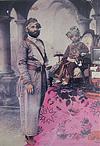 |

See Also:
-
Rulers and Royalty of India
