


 | Saturday, February 23, 2019 | |
Kumta Town in the 1930s Late Dr. R.M. Masurkar (1920-2004) was a practicing physician and leading citizen of Kumta town in North Kanara district. The district played a crucial role during civil Disobedience and Salt Satyagraha days. Though considered economically and socially backward-district its role in Freedom Struggle was extraordinary. Dr. Masurkar has left some vivid memories of Kumta, which was hub of political activities in 1920s and early 1930s."Those were the days when peace and contentment prevailed form the rich to the half starved poverty stricken Society because ignorance is bliss. Struggle for one's livelihood was their only problem. There were other reasons also for that sort of mental attitude of the people then. It was the time when Britishers had joined together the multi-fragmented or fractured pieces of India ruled by whimsical or occasionally benevolent princes who often waged wars amongst themselves for their personal ambitions like the heroes in stunt pictures keeping the innocent and the peace loving-subjects in a state of perpetual panic and a sense of insecurity. It must be some time, in 1922 or 23 when I was a child of 3 or 4 years that the freedom movement had started gaining ground in out small town of Kumta with processions, shouting slogans like 'Hindu Muslim Bhai Bhai' and 'down with the British Raj'. My eldest brother Sadashivarao was an active congressman and my second eldest brother Dr. G.M. Masurkar was also a congress volunteer. Dr. G.M. Muasurkar was asked to leave the Gibb High School along with other participants by the Principal as per the orders of the Government, that those students who took part in the civil disobedience movement should be debarred from attending the School, lest the School, should loose the yearly Government grant. The Shanteri Kamakshi temple situated in the heart of the town functioned, as a centre of freedom movement's circulatory system. Volunteers, propagandists and leaders were housed here. The deity seemed to infuse her spirit and inspiration in the congress workers. As a child, I remember having listened to some spirited talks of leaders in rap attention. I remember a big pyramid heaped of foreign clothes fashioned in western style like coats, pants, hats etc, turned into a bonfire surrounded by gaity of nationalist minded on-lookers. Our house was one of the guest houses for the itenarant workers who came ate and went away on their mission. My uncle Rao Sahib Ganaptrao Masurkar who had fought, earlier in this Gandhian movement against the Government, for redress of forest grievances also joined the movement spurning the title awarded to him. The kirtankar Shri Ram Pai had left a deep impression in me and I sang his two songs making jestures in accordance with the meaning of the words and stanzas. There was a packed audience and the faint memory appears to me like a dream as I recall the event. Ram Pai's kirtan was never dull or drab. It used to be full of funny anecdotes and sarcasm on the ordinances proclaimed by the Government one after another in succession to curb the National activities. One thing I may say here that every individual had one aim in mind and that was to achieve freedom. People belonging to different strata in the society and people belonging to different vocations in life served the cause of freedom movement in their own way and capacity. If a buswala would see a congress worker, walking on the road to reach his destination some miles ahead, the driver would stop and pick him up and leave him where he wanted to alight. Likewise house-holders would feed the itinerant volunteers. Doctors would not only treat the sick volunteers free of charge but even keep them in their house and nurse them as they would do to their kith or kin." (Edited from Dr. Masurkar's article 'My Random Reminiscences,' published in Kanada Vritta- Diamond Jubilee issue 1982. 'Kanada Vritta' A weekly started in 1916 was the only newspaper, for several decades, published in the district from Kumta. It is still going strong at 91). | ||
| Amma's Column by Jyotsna Kamat | ||
| Sunday, September 15, 2013 | |
Remembering Rose Aylmer My friend Dr. Shrivatsa Desai, is son of late. Dr. P.B. Desai distinguished historian and my Guru as well. Dr. Shrivatsa is an leading ophthalmologist settled in Doncastor UK. He has flair for writing in Kannada and is good at limericks. The other day he called and e-mailed Kannada translation of a short lyric of Walter Savage Lander, which was a tribute to his Sweet Heart of a short duration, Rose Aylmer by name, who died at the tender age of twenty.Rose Whitworth Aylmer! The name suddenly took me back to my Calcutta days (1977-1980). I was transferred there while working for All India Radio, and had gone to Old Park Street cemetery which is full of memorial stones which narrate stories of unsung heroes. There were graves of scholars, administrators, sailors, warriors, judges, teenagers, young kids and housewives, who contributed their mite in building British Empire. They were instrumental in building a lasting Indo-British Culture. Most of them died due to cholera, smallpox and other tropical ailments for which there was no cure or medicine in those days. The most impressive monument at that place was and perhaps still is, that of Sir William Jones (1746-1794) who came to India as judge of the high-court and was the first among Orientalists, who introduced India's rich literary heritage to the West. A few yards across Jones's towering monument, lay Rose Aylmer whose marble tomb had pretty decoration of dainty roses. The lines on her grave read, "To the Memory of the Honourable Rose Whitworth Aylmer Who departed this life March 2nd 1800 aged 20 years" On that tomb also were lines of literary importance, a rare elegy by an English Poet of fame, Walter Savage Landor (1775-1880?) by name. It was dedicated to the young lass whom he had befriended for a short while and who disappeared suddenly but who nevertheless kindled his poetic genius in no small measure. The lines read- Ah! What avails the sceptered race? Ah! What the form divine, What every virtue, every grace, Rose Aylmer, all were thine Rose Aylmer whom these waterful eyes May weep, but never see A night of memories and sighs I consecrate to thee In just eight lines, Landor is able to depict Rose's royal heritage, her beauty, virtue and grace which all went in vain. The poet in utter despair dedicates a night of memories and signs with tearful eyes to her memory. Dr. Shrivatsa, who had lost his beloved wife recently fell for the last four lines, adding only 's' for "night" in translation and could relate to the poet's sentiments better. His rendering of Landor's lines into Kannada sound natural and equally touching. He has only replaced lotus (padma) the Indian National Flower for Rose, falling in line with B.M.Sri the doyen among modern Kannada poets who had introduced some world famous English lyrics in Kannada in 1920's. Landor's Tribute was one of them. Daughter of an English baron, Rose Aylmer lost her father early and was living with her mother and sister in a town in South Wales, when Walter Landor met her. Fresh from college, he was only twenty one and Rose was sweet seventeen. The budding poet was drawn by her grace and vivaciousness. They must have met and exchanged letters, which are not forthcoming. Soon after, Rose Aylmer proceeded to India with her relatives, to visit her aunt, wife of Sir Henry Russel, judge of the supreme court of Calcutta. Rose suddenly died of an attack of cholera and had to be interned in Calcutta only. The news must have reached Landor quite late, as the distance and journey time were very long. But his outpourings have become immortal, drawing attention of writers and poets like Wardsworth and Yates. . . Charles Lamb exclaimed. "It is for Rose Aylmer, which has a charm. I cannot explain. . . . I lived upon it for weeks" | ||
| Amma's Column by Jyotsna Kamat | ||
| Wednesday, May 15, 2013 | |
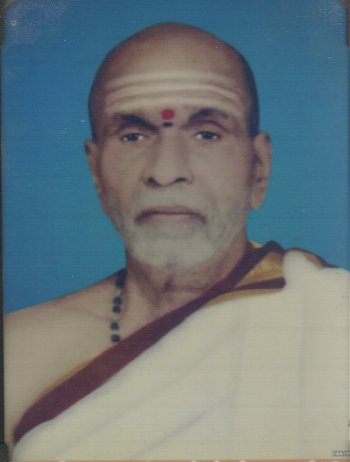
Karki Ramachandra Shastri Suri (Karki Ramachandra Shastri Suri(1914-2009)Some years ago, I had a rare opportunity to meet a great Sanskrit Scholar, who was spending his ripe old age at Kavalakki a small but culturally active village near Honavar, Kamat's town. I was quite keen to meet him. He was not only a highly respected scholar, trained in Gurukula or traditional educational center of higher learning but also a grand nephew of Karki Venkataramana Shastri Suri (1852-1892). Venkataramana Shastri was a pioneer in reviving Kannada language, a social reformer and wrote the first modern Kannada travelogue as also a play in Kannada, "Iggappa Hegde Vivaha Prahasana". A trained Sanskritist, he qualified and self trained himself as a lawyer in English and worked for revival of Kannada. He was associated with other luminaries of Bombay (Modern Mumbai) by founding a press and bringing out books and journals in Kannada. Hence I was excited to meet the famous scholar, and a descendant of the illustrious Karki family of Shastri-Suri's. The title Shastri denotes the qualification of the one who acquires mastery in Shastras or treatises on ancient lore including science. Suri is the highest title bestowed by the king or assembly of pundits on a person who is master of many branches of Sanskrit learning. It is a rare privilege to have two titles and Karki family owned the double title for generations, mastering traditional learning. Karki, a suburban area of Honnavar nowadays boasts of a Railway station for the entire taluka and a hub of business activities. In olden times it was also a famous centre of ancient learning. A Gurukula was established more than two hundred years ago, by Venkataramana Shastri Suri's ancestors. A center of traditional learning in Vedic lore, Shastras, Kavyas (literature), Astrology, Mathematics in addition to a Purohits (priests) training of conducting all rituals at temples and householder's life. The Gurukula attracted students from all over the region of Karnataka and Maharashtra. © K.L.Kamat I was introduced to Vidwan Ramachandra Shastri Suri who at the ripe age of 93 looked like a personification of ancient learning. Fair complexioned, bright eyed, prominently displaying bhasma (sacred ashes) and tilak, he had sage-like appearance. Bent with age, his tall figure, claimed majestic look. A little short of hearing, he could grasp my queries quickly and replied promptly. He seemed happy to talk about his education, learning and teaching for more than 70 years! In the family Gurukula there used to be 70 students. Tuition was free as also dormitories. The students had to arrange for their food "varanna" [feeding on weekly basis] system was in vogue wherein, each house-holder of the locality fed a student once a week by turn. Some students lived by begging grains and managed self–cooking. This charity (begging!) was never looked down upon. Known as "madhukari" (literal meaning involving honey!) it helped the poorest to acquire knowledge. Madhukari in ancient times was recommended to princes as well because it taught humility, equality and forbearance. I asked about his student time in Gurukul. "The study period for specialization lasted for each branch a minimum period of seven years and extended for Nyaya (Law; Smrit) and Vedanta. For priesthood it took from five to seven years as well. There were students from far off places like Pune, Satara and Bagalkot. He himself went to Sanskrita Mahavidyalaya at Dharwad for specialization of (Vedanta) under Virupaksha Shastri an authority on the subject at the time. During his Dharwad days, he too lived by madhukari, which consisted of millet bread and vegetables. By birth he was used to rice only. He had taste of the jail life also when he was arrested along with two of his friends who were freedom fighters. He was released later as no incriminating evidence came forth. He took-up teaching in Karki Gurukul when students numbered to about 200 in 1930's. Later he went to Mysore and taught in a Sanskrit pathashala of the palace of Maharaja of Mysore to his last, he was referred to as 'Mysore Sahstri'. He received four Gold Medals and a Kadaga (Thick gold bracelet) at the hands of the Maharaja which he distributed among his four sons, later. He taught Vedanta to present pontiffs of Ramachandrapura and Sonde Mathas who are today sound scholars, orators and conformed educationists and environmentalists. | ||
| Amma's Column by Jyotsna Kamat | ||
| Sunday, May 12, 2013 | |
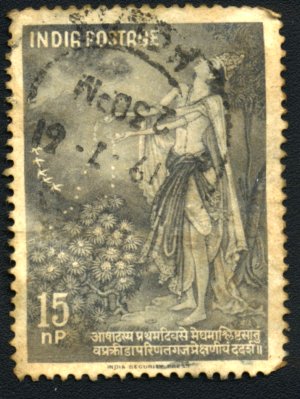
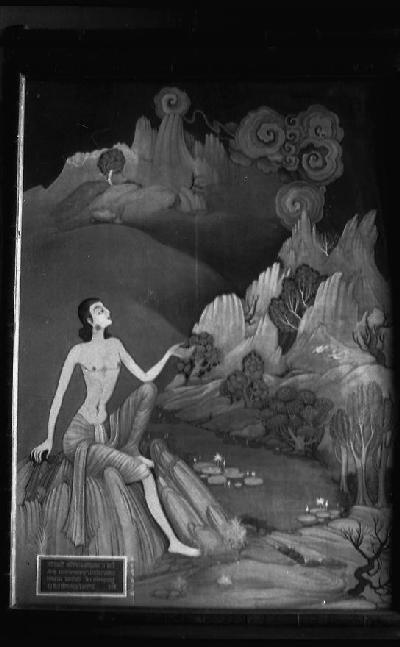
Cloud Messenger – Meghdut Lyric poetry took shape in India since the dawn of civilization as is evident from Vedic hymns and poems. Different metres took shape over centuries and classical Sanskrit literature provides fine examples of lyrics. Kalidasa, the greatest Indian poet excelled in lyrical poetry and even his plays have that lyrical quality.© K.L.Kamat Cloud Messenger or Meghdut consists of 115 stanzas composed in the Mandakrantha metre, of four lines of seventeen syllables. The theme of Meghaduta is the message of a love-lorn Yaksha which he wants to send to his wife living far away. Once a Yaksha, attending on Kubera, the god of wealth, was found neglecting his duties and incurred the wrath of his master. As punishment, he was banished to the sloping mountain of Ramagiri in present Madhya Pradesh. This Yaksha led a lonely and emaciated life. The rainy season approached and with it, dark moving clouds. The sight of clouds made the Yaksha sadder still, missing his wife all the more. He thinks of sending a message, through a cloud, moving northwards towards Himalayas, where his wife lived. He addresses a huge dark cloud. The first half of Meghdut, consists of the description of the regions the cloud has to traverse. He advises the cloud messenger to rest on the peaks of Mount Amrakuta, after quenching the forest-fire through his showers. River Narmada, mount Vindhyas, town of Vidisha and the stream of Vetravati as also the city of Ujjayini are mentioned. This appears to be the most familiar region of the poet. Then the cloud is directed to Avanti, sacred place of Kurukshetra, of the Ganga and the mountain from which she descended. Further north appear the snow fields, till the Mount Kailas, where the beautiful place Alaka exists of where the Yaksha's beloved lives. © K.L.Kamat In the second half, of the Kavya (lyric), the scenes of Alaka are described, as also Yaksha's own residence. His wife's beauty, her surroundings, mental and physical conditions are described. The Yaksha imagines her emaciated body, sleepless nights and viewing through the window, the endless sky. When finally she is able to catch the huge dark cloud, it should deliver her the message that her husband is still alive and ever longing to see her. The Yaksha always saw her hidden in the different aspects of nature, which are vividly described. In creepers I discern thy from, in eyes of startled fawns thy glances, The Yaksha advises (through the cloud) his beloved, to be courageous. One day, the sorrow will end and they would surely be re-united. Then he begs the cloud to return back, after successfully delivering his message, with reassuring news. Finally the exiled lover bids the messenger farewell, with the hope that he may never, for a moment, be separated from his spouse the lightening! Poet Ambikatanayadatta (D.R. Bendre) has translated Meghaduta in Kannada. Some feel that it is as lyrical and emotion filled, as the original immortal love lyric. See Also: | ||
| Amma's Column by Jyotsna Kamat | ||
| Tuesday, November 20, 2012 | |
Prashanat Hegde, The budding Poet I met Prashnat Hegde a brilliant teenager, during one of Kamat Foundation's periodical ventures in Honnavar of creating environmental awareness, love of travel, and bird and insect watch, among school and junior college students. One such programme was in Areangadi. Janata Vidyalaya founded by Dinkar Desai, was a great boon to village youngsters, residing round about. It is on the ideal spot, on the cross road to five villages.In Areangadi Junior College, Kamat's books on birds and insect life, as also his popular American travelogue were included for discussion. Prashant Hegde who discussed the travelogue, "Nanoo Amerikege Hogidde" surprised all of us by his eloquence, mature judgment and original interpretation that how a well-written travelogue could inspire a village youth like him. He composed verses there and then, as a tribute to Krishnanand Kamat at the end of his 15minute speech. "I am given only 15minutes. I would have loved to speak for fifteen hours, to pour out all my feelings aroused by this book!" He declared to thunderous claps and sat down. It was a pleasant surprise, to received a collection of Chutukus (limrics) and Gutukus ('gulp') a newly coined word for short verse, by Prashant Hegde, a couple of months ago, named 'Paramapada' (highest word or verse. Pada stands for both in Kannada). In the introduction he states that Kamat's book brought out hidden poetic talent in him, some of which are on Kamats . These are reproduced below. If a young and creative mind in a remote village in Honnavar Taluk is inspired by our Foundation's efforts and Kamat's writing, there could not have been a better tribute. Incidentally village of Kadtoka, is just nearby from which, the earliest chutuku writer and famoust poet late V.G. Bhat (1923-91) hailed. The Janata Vidyalaya of Areangadi where Kamat Foundation's programme was arranged was founded by Dinakar Desai who excelled in Chutuku form of poetry and was a great educationist. Prashant hails from nearest Vandoor village. Desai chose sites for his schools where cross roads from four to five villages met. Prashant Hegde may one day bloom as a good poet on the directly winding path where two great chutuku writers of Karnataka once tread. | ||
| Amma's Column by Jyotsna Kamat | ||
| Saturday, September 29, 2012 | |
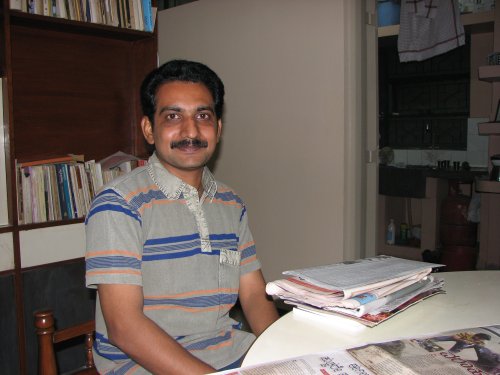
Kamat Literary Award Winner Announced! D.G. Mallikarjuna is Winner of Kamat AwardWriter-Photographer D.G. Mallikarjuna has been chosen for this year's Kamat Literary Award for his pioneering work "Click". The Krishnanand Kamat Award carries Rs. 25,000 cash award, a plaque and other honors. The award will be given in a special function in Bengaluru on November 18th.
"There cannot be a more deserving work of 2011 or a candidate for Kamat Memorial Award", Dr. M. Byregowda, the publisher of "Click" said, congratulating the young author, who already an accomplished photographer. "In the process of recognizing Sri Mallikarjun, we honor my father, who had a similar, learning approach to life and creative interests" -- Krishanand Kamat's son Vikas Kamat said. " It is like awarding ourseleves!" Congratulations to D.G. Mallikarjuna and hope his experience and maturity will enrich the Kannada Language and Culture in the coming years! | ||
| Amma's Column by Jyotsna Kamat | ||
| Saturday, September 15, 2012 | |
My Days in All India Radio IV Early days in Akashvani MysoreIn the coming days with more and more of origination of programmes, the contact with intellectuals in Mysore increased, and everybody forgot about the protest march, soon. There was warm and close relation which I still cherish. As luck would have it, the engineer who always objected to origination of programmes was transferred to a station in Maharashtra and the engineer who came in his place was a great sport and enthusiast. He loved music and always supportive of origination, inspite of the fact the programme and engineering sections suffered equally due to raw and untrained incumbents of AIR and LPT (Low Power Transmitter) Television. Two noteworthy programmes of those days are to be mentioned here, which establish that dedicated men and not machines determine the effective working of a Radio Station. The first World Kannada Conference was organized at Mysore (1985). The small radio station had to cover the programmes of the great peagent for three days, from morning till late in the night. The work of coverage of programmes was distributed among all staff members, irrespective of their cadres. The programmes usually handled by the officers, were covered by the music artists, composers and a script writer, even by a driver! This was unprecedented, but everybody gave their best, for the cause of Kannada. Great writers like Kuvempu, Shivarama Karanth, Prof. V.K. Gokak, Dr. R.S. Mugali and scores of others were present in Mysore and Rajiv Gandhi, then Prime Minister of India inaugurated the august three day cultural meet. (Pictures of Folk artists) © All India Radio The year 1986 was highly memorable. It was golden jubilee year of the Mysore Akashvani, Fortunately for me, Kuvempu who had almost become a recluse, agreed to inaugurate it. It was all the more important because the first ever broadcast from AIR or Akashvani Mysore, in 1935-36 was by Kuvempu himself! He remembered how Prof. M.V. Gopalaswamy the founding father of broadcasting in Karnataka, approached him for live broadcast of a welcome poetic address. 50 years later the Poet was happy to listen to his famous song "O Nanna Chetana" performed by 40 youngster in chorus, after inaugurating. An orchestra programme by all veterans led by Late Dr. Doreswamy Iyengar was arranged. A Kailasam play was staged again by the old stage artists. In the same year 'Viswabharti' a programme for youth, involving students of 22 countries studying in Mysore university campus was arranged. Now it seems as dream scene. Students from four African countries, young Tibetan lamas and students from Palestine were also invited. The last group danced and sang so rigorously that two planks of the wooden stage of the magnificent auditorium of Jaganmohan Palace broke! I got published two books during my tenure. One was on poems welcoming New year Yugadi by poets of Mysore and another on Gandhiji as visualized by thinkers and writers involving late Raja Rao, Prof. A.N. Murthy Rao, Prof. U.R. Ananthamurthy, and the Gandhian scholars. I was transferred to commercial Broadcasting wing of AIR Mumbai at the end of my three-year tenure (1986) disturbing my already truncated family life. But I left with sweet memories of challenging but rewarding days in Akashvani Mysore. | ||
| Amma's Column by Jyotsna Kamat | ||
| Sunday, June 10, 2012 | |
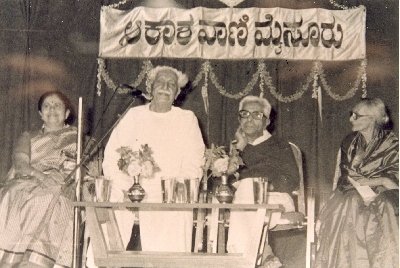
Tribute to H.V. Savitramma Today's Prajavani Sunday Supplement has my article on H.V. Savitramma, who passed away last month. Here's a cached copy (Kannada Language Content) | ||
| Amma's Column by Jyotsna Kamat | ||
| Monday, April 30, 2012 | |
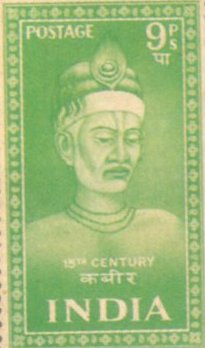
Contemporary Agrarian scene in Kabir’s poetry Contemporary agrarian scene in Kabir's poetryIt is known fact that India lacks in written historical documents. This is a big hindrance in reconstructing the authentic picture of the conditions prevailing in the contemporary region selected by a researcher. At times traditional sources of folk and traditional songs help but with popular work of saint-poet like Kabir, there are chances of interpolations. But some religious works compiles by holymen and recited regularly by the devotees, are reliable for dates and some aspect of socio-economic history. Professor Irfan Habib has quoted Kabir's verses preserved in Granth Saheb, in one of his articles on agrarian conditions prevailing in the sixteenth century C. E. The verses are usually allegorical when saint-poets deal with God-man relation. One of the Kabir's poems refers to functioning of the revenue administration, recalling the revenue collector for the settlement of accounts. Of course it is allegorical, compared to death when a human recalled by the Creator, after the 'job' is over in the materialistic world. © K.L.Kamat "The amal (amaldar's the revenue collector job) has ended: the time has some to seize the collection (jam). (They say) 'what have you gained? what lost?' Come immediately, the Diwan summons you! The divine farman (order) of the Court has come. Submit the petition (ardas), that the village (gav) had some arrears. Take the final instalment (nibera) this night. Whatever are the expenses of our visit (kharch) they are yours to bear! Say your morning-prayers in the saria (inn) on your way before day-break." These verses forcefully bring out the temporary nature of the tenures of revenue-officials, which was a special feature of medieval times, says Profession Habib. Other part dealing with transitoriness of human life, needs no comment.
| ||
| Amma's Column by Jyotsna Kamat | ||
| Sunday, April 8, 2012 | |
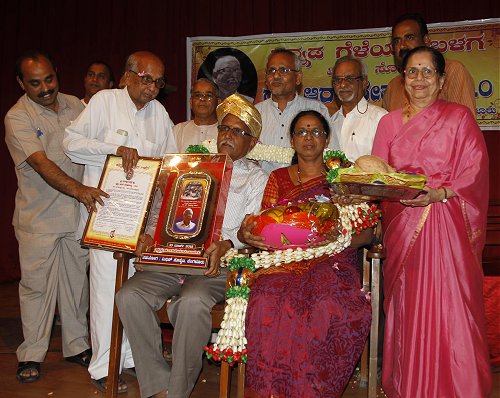
Seshasastry is Sixty! Kannada Geleyara Balaga, an association of Kannada friends recently honored Dr. Seshasastry on turning sixty, and I was invited to preside over the function.It was such a joy, as Seshasastry has been a family friend for decades. He has been instrumental in building on what eventually became the gigantic Kamat Historical Archive. The friendship of Sesha and Kamat clicked because Sesha is a very likeable social person, had many contacts in academia and complimented my husband who was shy and preferred anonymity. Detailed Report: Seshasastry is Sixty!
| ||
| Amma's Column by Jyotsna Kamat | ||
Browse Amma's Column by Tags
1920s - ancient India - avatars - banana - bangalore - buddha - calcutta - christmas - coins - colin mackenzie - colonel - conference ii - conversions - cousin - cows - customs - dalit - democracy - dhols - dr narayan - drums - dung - fables - far east - gandhi - gandhiji - great deluge - guru - hinduism - home library - human body - idolatry - kalpa - karnataka - kautilya - kingdoms - krishna - manners - marriage - new books - new year - nuances - obituary - old temple - patience - personalities - peru - pontiff - postal service - prime source - queen - rao - relevance - religion - revolt - romance - runners - saga - saints - Saints of India - salt satyagraha - science - shaven heads - sher - sri lanka - suresh - terracotta - tradition - trauma - tsunami - tulunadu - unity - universality - women - zen - 11th century - 75th anniversary - alberuni - all india radio - amrita - ancient art - ancient india - ancient indians - animals - anmori - arthashastra - autobiographical notes - b_g_l_swamy - babies - basham - bedas - belief - bengaluru - bhagat singh - Bhagatsingh as seen by Kamaladevi. - bhagavata purana - bhagirath - Bhakti Cult - bharata - bhat - blouse - brahmin - brute - buddha jayanti - card games - cart - caste system - centenary tribute - centennial - chanakya - chariot - cheers - chilli - chinese monk - Christmas - christmas eve - cloud messenger - cockfights - code of manu - colonel colin - complete works - conch shell - cuisine - curry - customs - dasa - demons - dessert - devil worship - dhyan - dikshit - dikshitar - discovery - doldrums - eknath - elephant - empire - epigraphy - fanny - festival foods - festive - forest scene - freedom - gandhi - gandhiji - ganesh - gautama buddha - gayatri mantra - gesture - Goa - gods - gramophone record - grandmother - great men - grinder - guru - happy new year - haste - helping hands - hind swaraj - hind_swaraj - hindu - hindu religious symbols - hindu texts - hinduism - hindus - history conference - humanist - hunger - idolatry - indian civil service - indian names - indians - institution of marriage - interviews - jaina - juggernaut - kamath - kannada - karnataka - kasaragod - kavya - keladi - krishna - laughing buddha - legacy - lotus - loving touch - m n srinivas - mallya - mama - mango season - manu - masters - materialism - medieval india - memories - middle path - midwife - misadventure - moorthy - music tradition - musical - musings - narad - narada - new articles - night life - obituary - offerings - old photo - Om - ornaments - pai - pampa - panchatantra - peacock - peacock dance - peacock dress - pearls - philanthropist - pigeons - poet - poetess - potpourri - prayer - prehistory - promising artist - prostitutes - queen - quilt - rahul - rajasthan - rajendra - ramayana - ramdas - rao - rare volume - robber - roots - rubaiyat of omar khayyam - saints - sane guruji - saraswati - saraswats - science - scorn - sea navigation - sedam - serpent worship - shameful practice - sharana - shastra - shivaji - silver art - sorab - south east asia - south india - subba rao - sunset - swami - swamy - swastika - tara - tea - temple school - temple town - terracotta_town - three books - tiger - titan - tonsure - torave_ramayan - tradition - translator - travelogue - tree of life - tribute - tsunami damage - Tulasidas - tuluva - upanishad - vedanta - vedas - viswanath - Viswanath Kashinath Rajwade - vivekananda - w h sleeman - wall paintings - what is in a name - wilks -
|
|
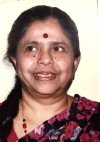
Jyotsna Kamat Ph.D. lives in Bangalore.
More articles by Jyotsna Kamat
 Jyotsna KamatAmma's
Column
Jyotsna KamatAmma's
Column