


Having accepted a job in the Central Government, and determined to go wherever I was posted, I was compelled to live all alone, leaving far away my husband and my son. Even telephone was rarity in India in 1960s and 1970s. Every three years, I was transferred to a different city.
My late husband, K.L.Kamat and myself agreed upon a plan of writing letters to each other everyday. It is interesting to recollect that our letters crossed each other every day though we stayed thousands of miles away! At one stage, we were living as far away as two national borders. I was in Rajasthan, close to western border with Pakistan. Kamat was in Plassey, in West Bengal close to eastern border with Bangladesh. Our letters greeted each other everyday!
It is letters, and letters only, that remained constant source of communication between us, and hence a uniting factor. Our son Vikas, grew up in our joint family household of Honavar in the company of aunts, uncles and cousins and able guardianship of my mother-in-law. He was also coaxed to write letters early to his parents, by the aunts. His infrequent postcards in big and bold Kannada letters were things of great joy.
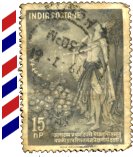 | See Some Sample Letters by Kamat |
Kamat was a sensitive letter writer. His keen observation of men and matters, knack for narration, eye for details, laced with fine sense of humour did a lot to reduce my loneliness, in far off places. Our Publisher, the great G.B. Joshi, writer, thinker, playwright and doyen among Kannada publishers, had spotted Kamat's talents at letter-writing. He prodded Kamat to edit some of the letters he wrote to me over years.
Kamat did a good job. He collected (rather, chose those I had preserved) the letters of the first five years of our married life and edited the too personal contents, which could be of no interest to general readers. 'Preyasige Patragalu' (Letters to Beloved) became a trend setter in Kannada literature.
Letters written by poets and intellectuals to their soulmates and friends are not rare. Some of them are part of world literature. But I had not expected a writer to be my husband and that the thousand of letters Kamat wrote will be the only binding force of our family life. Vikas has estimated the total number of letters we wrote to eachother at approximately 10,000. Only two edited collections have seen light of the day.
Today's I.T. revolution has brought the world, very close. Communication has become fantastically quicker, Business is faster than ever. But has it brought human hearts closer? (inspite of the mobile telephone clutched to the ear and heart!?) The heart-beat, eagerness, anxious wait, a moments of fulfillment, and the joy one gets a letter after a long wait, are a thing of the past.
Letters in one's own handwriting, letters which are affectionate, advising, consoling, and cajoling could be a great source of strength, during bereavements, depression, and forced living in far off places or through loneliness.
In one way I was one of those fortunate few, who have tasted the nectar of letters, full of concern for the soul-mate, though the writer remained inaccessible and thousands of miles away.
Such letters could be read again and again. In a joint Indian family letters from far off places were shared by family members and friends in reading. This cannot happen