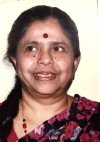


Harikathe is known as Kathakalakshepa in Tamilnadu, Kathaprasangam in Kerala, Katha in AndhraPradesh, Keertan in Maharashtra, Kathakatha or Sankeertan in Bengal, Pandavani in Madhya Pradesh etc. The term " Kathe" or story is common in this medium, proving that story as main theme has universal appeal.
Teejan Bai of one woman theater of Madhyapradesh

Though sage Narada is supposed to be the progenitor of Harikathe form, it is generally believed that the Keertan which has a long time tradition in Maharashtra, traveled to South through the Bhosles or House of Shivaji the Great (C 1637-1799) when they established a kingdom in Tanjore, Tamilnadu. A blend of entertainment and education, it soon became popular in the entire southern region. Talented persons who had sound background in Sanskrit and regional language further cultivated singing, acting and narrating. Thus the Keertanakar became a one-man theater and performed at a stretch for three hours interspersed with jokes, mimicry and commentary on current events before eager audience. At interval, the audience was made to sing popular bhajans, giving relief to the artiste and keeping continuity of the mood.
The Keertan or Harikathe artistes kept moving. They included popular songs of the respective region of their irrespective languages. Hence this mass medium became broad based. In earlier times, when education of degrees and certificates was not tagged with professions, Harikathe became an agency of popular education and general knowledge without linguistic parochialism. People warmly welcomed and sang Kabir and Meera bhajans along with Purandardasas composition.
During Freedom Movement Keertan form was utilized for awakening nationalism in a subtle way. My father used to tell about famous Keertankars of his time, who improvised mythological events, with happenings in the country. Listeners could easily visualize who the "demons" were!
As with other performing arts of olden times, Harikathe receded to the background, due to lack of patronage and multiple modern mass-media. But the few surviving artists do perform now and then on television and other invited audience programmes, reminding one of their glorious tradition. Purandardasa, the great saint-poet of Karnataka seems to have sung and danced with Tanpura and Tipris and inspired generations of Keertankars of the southern region.
Line drawing of a Kirthankar
© 
Autograph of C. Rajagopalachari
Pictures- 1) Teejanbai of Pandavani 2) Line drawing of a Keertankar