
Lord Shiva in Indian Art


© K. L. Kamat
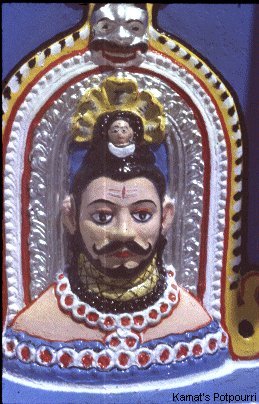
Shiva from Mangeshi Temple in Goa
Lord Shiva (a.k.a. Siva), the destroyer of the evil is also known as Ishwar, Shambhu, Shakta and a number of other names and is widely worshiped in India. An especially partial God (he is known even to relinquish his own powers (to Rawana) when pleased with the sacrifices and offerings of his devotees), Hindus believe that he resides in the great Himalayan mountains, wearing only ash.
Shiva is depicted in ancient Indian art carrying the sacred river Ganga (the Ganges), romancing with wife Uma (at Badami), punishing the evil and most commonly, performing his powerful cosmic dance.
The Shiva-Linga, in which the cosmic powers of Shiva and Uma are symbolized in a radiant union, Shiva's vehicle, the Nandi bull, and his other mystical powers have influenced thousands of years of Indian art, thought, and faith.
Depiction of Lord Shiva at Kamat's Potpourri
- A Metallic Artifact Depicting Lord Shiva and the Snake
- A Sculpture of Lord Shiva
- Artist's Depiction of Lord Shiva
- Bust of Lord Shiva
- Chandra Mouli, Bell-Metal Icon of Lord Shiva
- Collosoal Statue of Lord Shiva
- Deity of Mangeshi temple Goa
- Depiction of Lord Shiva as a Wandering Ascetic
- Eight Handed Lord Shiva
- Eight Handed Lord Shiva by G. Gnanananda
- Followers of Lord Shiva
- Four Headed Diety (Lord Shiva ?), Ballegavi
- Lord Shiva
- Lord Shiva and Arjuna Pick a Fight
- Lord Shiva and His Consort Parvati
- Lord Shiva and Parvati
- Lord Shiva as Dakshinamurthi
- Lord Shiva in a Relief
- Lord Shiva in gesso Art work
- Lord Shiva in his Court
- Lord Shiva in Indian Art
- Lord Shiva Performing His Cosmic Dance
- Lord Shiva Performing His Cosmic Dance of Destruction
- Lord Shiva Performing the Cosmic Dance
- Lord Shiva Tames the Evil Elephant
- Lord Shiva with his Trishul (Trident)
- Male Organ as a Symbol of Lord Shiva
- Nataraja -- the cosmic dance of Lord Shiva
- Phallus as a Symbol of Lord Shiva
- Portrait of Lord Shiva
- Romance of Shiva and Parvati
- Sculpture of Sitting Lord Shiva
- Shiva and Parvati
- Shiva and Parvati riding on Nandi the bull, Lepakshi
- Shiva the Magnificent
- Shivabhakta -- a Devotee of Lord Shiva
- Sitting Lord Shiva -- from a Cave in Ellora
- Ten Headed Rawana as Devotee of Lord Shiva
See Also:
- Goddess Parvati -- Shiva's wife, also referred as mother goddess
- God of Beginnings -- Ganapati is a very popular deity among Hindus and is worshipped all over the world as the God of beginning.

Topics on Hinduism
