


Bangà-Ranga: Bengali Theater
by Jyotsna Kamat
First Online: August 15, 1997
Last Updated: January 13, 2026
The city of Calcutta came under the British influence being the capital of India (till 1911). English drama companies used to visit now and then and influenced regional folk theater known as Jatra(Jaa-traa). The Parsi theatre which was as imitation of the British theatre in curtains, lighting and seating arrangement (proscenium) quickly caught up with Bengali intelligentsia. Plays with mythological, historical and social themes began to make appearance and professorial troupes started traveling the whole state and the nearby regions.
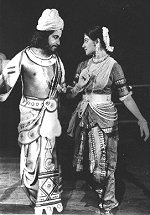
A Bengali Stage Scene
Stage was used to create social and political awareness. Slowly music receded, the emphasis being more on the factual story and happenings (operas were staged) whereas earlier music and dance formed essential part of Indian drama, the new theatre had hardly any songs.
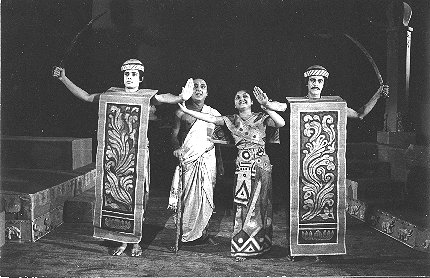
Maitreyaka being accompanied within Vasantasena's mansion -
A Scene from Mrichhakatika
Educated groups came on the scene and enacted social dramas and regional versions of Shakespeare, Insen and Brecht. Rabindranath Tagore's plays so far considered unstageable also made appearance.
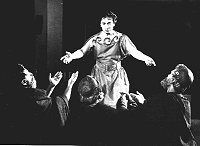
Shambu Mitra - the famous Bengali dramatist
But the absence of music and dance led to lack of interest of the masses which was soon realized by the troupes. The earliest form of folk theatre, Jatra was revived and many modern plays appeared in Jatra form and caught up. Even the third theatre of Badal Sircar or taking theatre to masses (street plays) has started to include group music profoundly and have come to stay.
See also at Kamat's Potpourri
- Portrait of Rabindranath Tagore
- Yakshagana - dance, song and theater integrated into one art form
- Pictures of West Bengal
- Marathi Theater
- Theatrical Arts of India
- Marathi Natya Sangeet -- Mohan Nadkarni describes the stage music behind the vibrant Marathi theater.
Author Dr. Jyotsna Kamat remains a great fan of theatrical arts in general. Her book "Vanga-Ranga" ( in Kannada language) is awaiting publication. |
Bengali CulturePictures!

