
Wodeyars of Mysore


1578 A.D. to 1947 A.D.
Mysore became independent after the fall of the Vijayanagar Empire (1565 A.D.) and remained so till the independence of (rest of) India in 1947. For a period Hyder Ali usurped the kingdom and after his and his son Tippu Sultan's rule, the kingdom was returned to the Wodeyars (a.k.a. Wadiyars and Odeyars) by the British in 1799. Wodeyars contributed a great deal towards arts and culture. Palaces, temples, the Mysore school of traditional painting, women's schools and colleges and music maestros bear witness to the liberal grants and patronage of Mysore kings. Mysore was the only highly industrialized and progressive native state in India in steel, silk, soaps and hydro-electricity. The kingdom was benefited from visionaries like Sir Mirza Ismail and Sir M.Vishweshwariah who served under the Wodeyars.
|
|
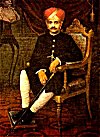 Nalvadi Krishnaraja Wodeyar (1902-1940 A.D.) |
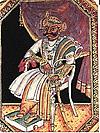
The Wodeyars (aka Wadiyars) of Mysore
- The Mysore Palace
- Amba Vilas Palace, Mysore
- At Royal Court of Mysore
- At the Durbar of Wodeyars
- At the Mysore Durbar
- Chamaraja Wodeyar with Family
- Chamaraja Wodeyar (1863-94)
- Golden Footwear
- In the Court of Mysore Palace
- Jayachamarajendra Wodeyar (1919-1974 A.D.)
- Jayachamarajendra Wodeyar (1919-1974)
- Krishna Rajendra Wodeyar IV
- Krishnaraj Wodeyar IV
- Krishnaraja Wodeyar IV (1902-1940)
- Mummadi Krishnaraja Wodeyar
- Old Mysore Palace, Mysore
|

See Also:
- The Jewelry of the Mysore Maharaja
- Mysore Collection at Kamat's Potpourri
- Paintings of Mysore Traditional School of Art
- Dynasties of the Deccan
