





Today I started reading S.L.Bhyrappa's classic Kannada novel "Gruhabhanga". I love Bhyrappas' writing, because of his profound understanding of Indian philosophies, and his own very harsh experiences of Hindu life. This one begins with a thirty-one year old widow taking her son to task for not studying. The fifteen year old son, in response, tells his own mother - "You let me be Munde! (a derogatory word for a widow), otherwise I am going to ask Rudra the barber to shave your head!"
The incident was so troubling due to my own experiences of witnessing the injustice meted to the widows, I had to stop reading and reminiscence.
Of course, the novel is set at a time in India where becoming a widow was considered the worst of a woman's crimes. You know, I do not believe much has changed since.
Tonsuring of the head might not be as common, although below is a photograph taken in year 2001 -- widows will not even agree to be photographed, due to social stigma.
© K. L. Kamat
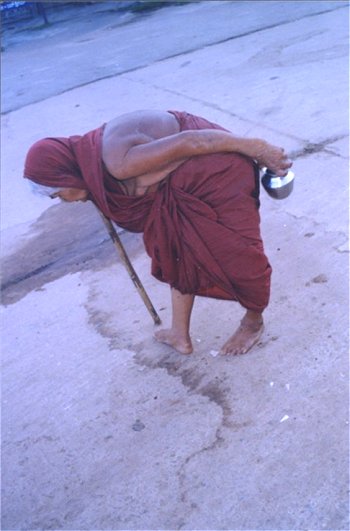
The Misery of a Widow
In my childhood in village India, the above scene was a common sight. The kids had been told that the sight of a widow was ominous and many a times, they would spit and curse at her for what bad luck she might bring. In our cloth-shop in Honavar, we had a large shelf of sarees meant just for widows. There were only two choices: plain white, or plain red.
Within my own family, there were widows. My grandma was a widow, and while she did not shave her head or wear mono-color, she did not attend any family functions, including the weddings of many her children. Much to the credit of Kamat family, Kaki was treated with affection and respect, and we did not tolerate anyone hurling an insult at her.
My mother is a widow now, and I cannot imagine how can it ever be any of her fault that my father is no more?!

See Also:
• Plight of Widows in India
• Bhyrappa and I
• Tribute to Grandma